
How to Compile a Toilet Partition Handover Documentation Index
Quick answer: toilet partition
Compiling a toilet partition handover documentation index is a coordination task, not a marketing exercise. For overseas contractors, architects, interior designers, owners, renovation companies, distributors, and construction teams, the index should bind every recommendation to maintained product facts, visible evidence limits, and project-specific drawing review. EBUNGE product category includes commercial Toilet Partition / Toilet Cubicle. That confirmed fact anchors the scope.
Everything else—material, hardware, dimensions, finishes, mounting, ratings, and quotation terms—requires matching approved technical evidence before it enters the index.
This guide provides an evidence-bounded framework. It does not assert compliance, performance, or hidden construction. Illustrations show generic design references, not completed EBUNGE customer projects. Use the steps and checklists below to structure a handover index that project teams can review, challenge, and maintain.
What the Handover Index Must Cover
A handover documentation index is a controlled register. It lists the documents, drawings, schedules, and records that accompany a commercial toilet partition scope. The index itself does not prove compliance; it identifies what evidence exists and where gaps remain.
For a toilet partition handover documentation index specification, start with the project’s own requirements. Then map each requirement to a document type. Do not infer material composition, dimensions, or performance from illustrations. Do not treat HPL, compact laminate, phenolic, or stainless steel as interchangeable. Each material family has its own evidence path, and the index must reflect the approved project-specific selection.
Core document groups
- Layout and setting-out drawings for the toilet cubicle area.
- Door operation and privacy review notes.
- Support interface coordination records.
- Cleaning and maintenance documentation references.
- Applicable local requirement review notes.
- Approved technical evidence for any project-specific material, hardware, dimension, finish, mounting, or rating.
Step-by-Step Compilation Process
Use a numbered process to keep the index auditable. The sequence below is a coordination framework, not a compliance claim.
- Confirm the project scope and the responsible reviewers for layouts, privacy, door operation, support interfaces, cleaning documentation, and local requirements.
- Collect the current drawing set and mark revision status. Do not mix superseded sheets with approved ones.
- List every project-specific material, hardware, dimension, finish, and mounting detail that requires approved technical evidence.
- Cross-check each listed item against the evidence file. If evidence is missing, record it as an open item rather than assuming a value.
- Review door operation and privacy notes with the project team. Confirm that the index references the reviewed documents, not verbal assumptions.
- Review support interface coordination records. Confirm that interfaces are described without inferring hidden construction.
- Add cleaning documentation references and applicable local requirement review notes.
- Issue the index for project-team review and record comments, decisions, and outstanding actions.
Evidence Boundaries and Review Discipline
An index is only useful if its boundaries are explicit. State what is confirmed, what is project-specific, and what remains unverified. This prevents downstream teams from treating a generic reference as a product fact.
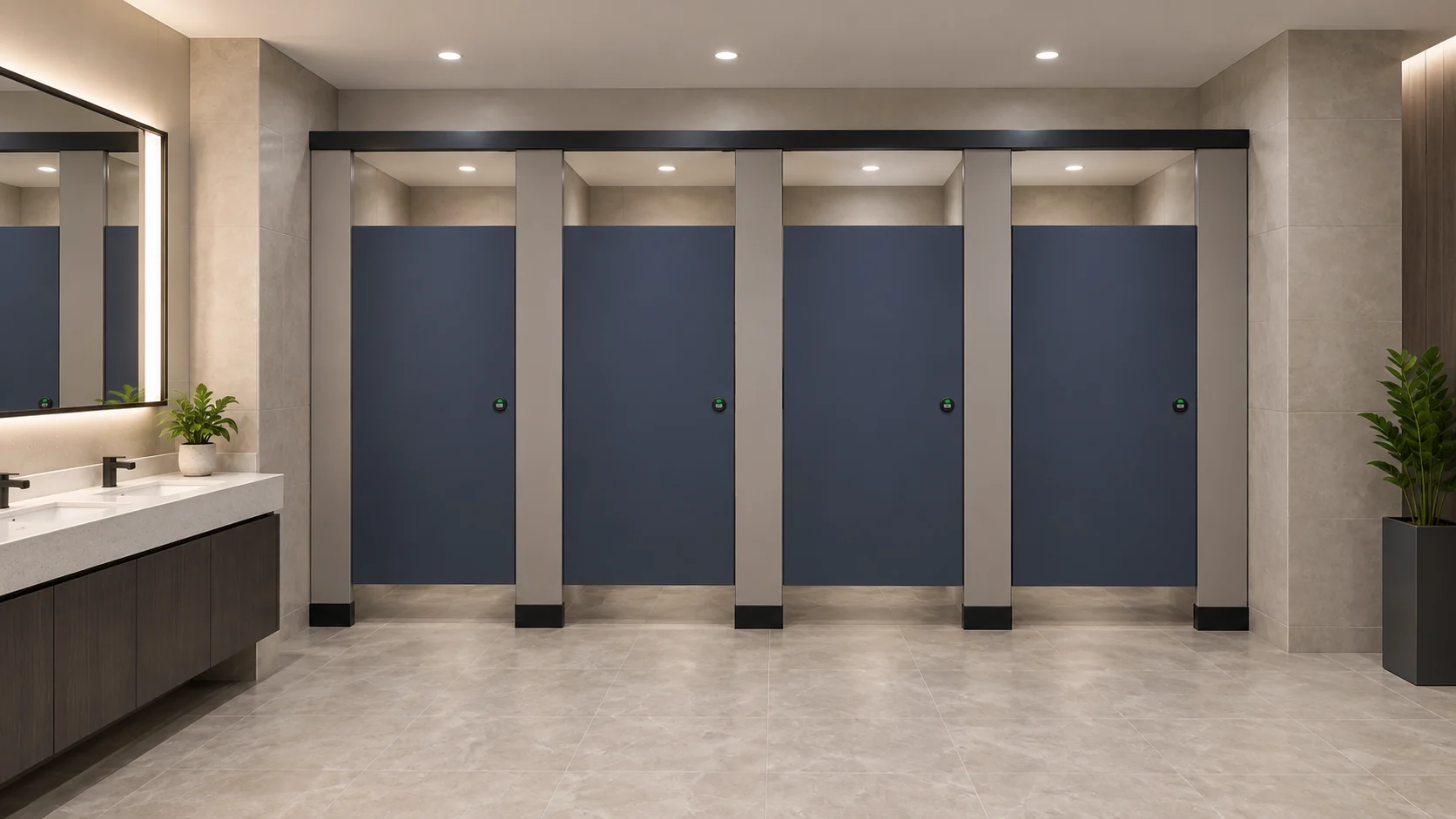
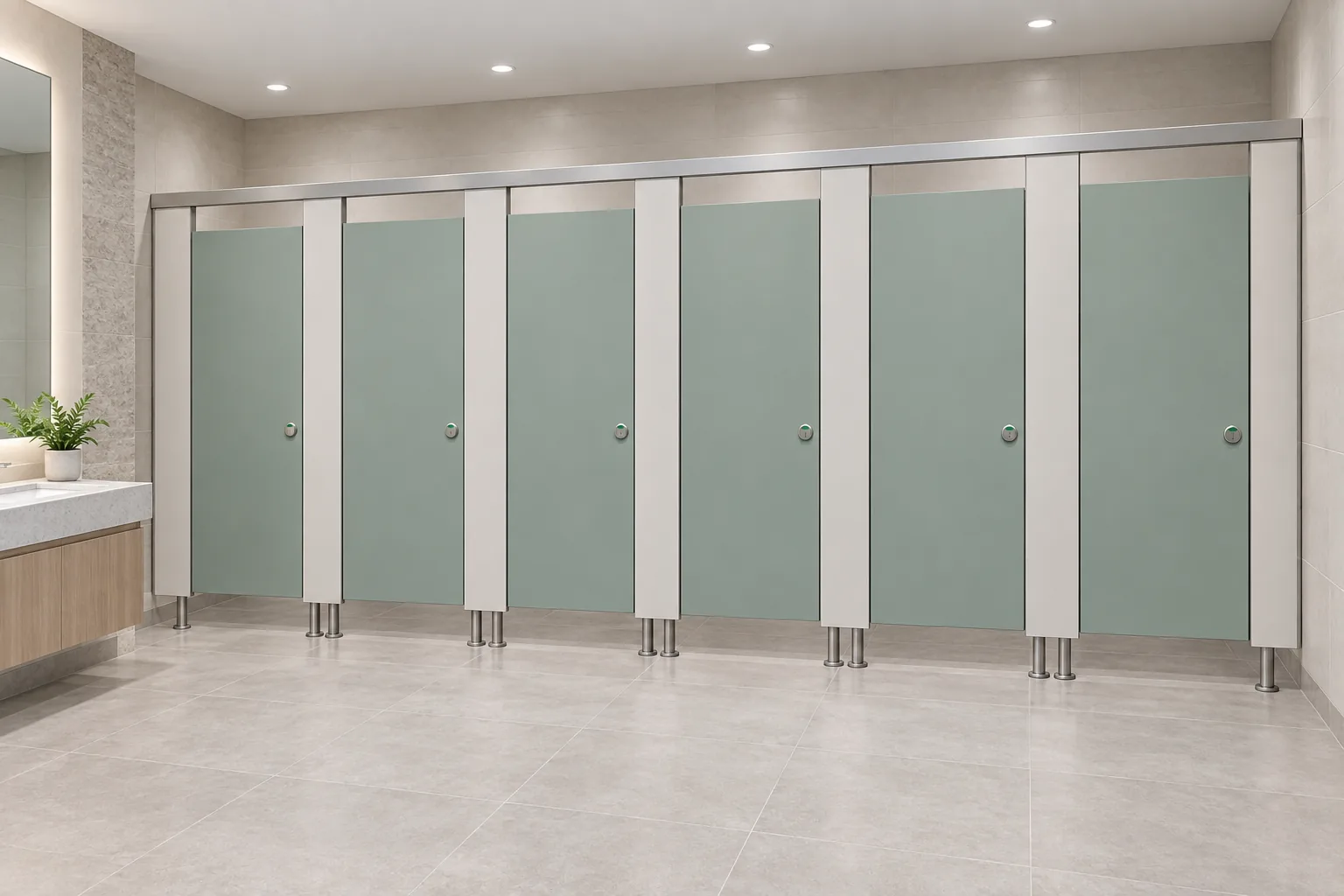
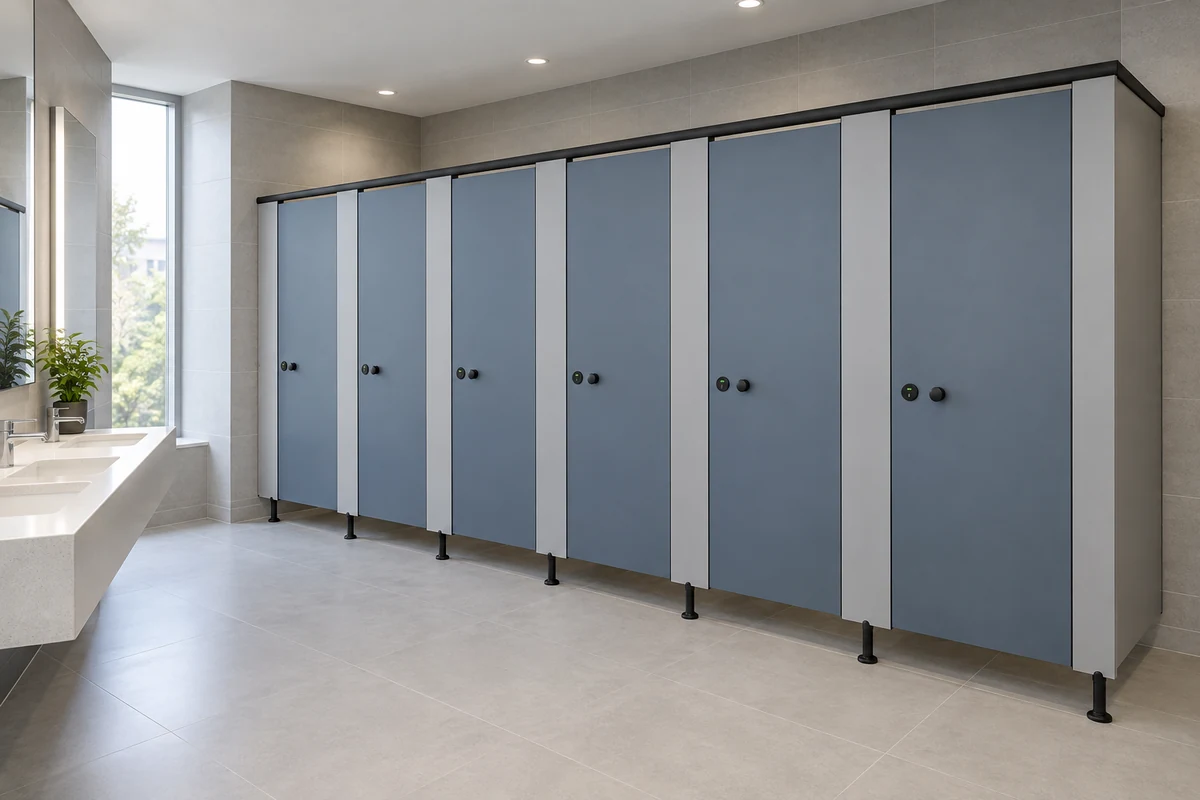
Evidence note: Any project-specific material, hardware, dimension, finish, mounting, or rating requires matching approved technical evidence. Illustrations show generic design references, not completed EBUNGE customer projects.
Do not describe toilet cubicles as movable operable walls. Do not introduce suspended wall travel, stacking, or parking mechanisms. Those concepts belong to different product categories and would misrepresent the scope.
Review questions for the project team
- Does each index entry point to a controlled document?
- Are layout, privacy, and door operation reviews recorded?
- Are support interfaces described without inferred hidden construction?
- Are cleaning documentation and local requirement notes referenced?
- Are open items clearly marked for follow-up?
Checklist for a Maintainable Index
Use this checklist before circulating the index. It is designed to surface gaps early, when the project team can still resolve them.
| Check | What to verify | Action if missing |
|---|---|---|
| Scope | Project areas and responsible reviewers are named. | Add owner and reviewer fields. |
| Drawings | Revision status is current and consistent. | Replace superseded sheets. |
| Evidence | Project-specific items link to approved technical evidence. | Record as open item. |
| Door operation | Review notes are attached. | Schedule a review. |
| Support interfaces | Coordination records are referenced. | Request interface clarification. |
| Cleaning | Documentation references are listed. | Add the relevant records. |
| Local requirements | Review notes are present without asserting compliance. | Flag for local review. |
Common Pitfalls to Avoid
Most handover index problems come from overreach. Teams may copy a generic specification and present it as a project fact. Others may treat a visual reference as proof of construction. Both weaken the index.
Another pitfall is mixing material families. HPL, compact laminate, phenolic, and stainless steel are not interchangeable. The index should reflect the approved project-specific selection and its evidence path, not a blended assumption.
A third pitfall is omitting cleaning documentation. Cleaning records and instructions are part of the handover package. They help the owner maintain the installation without guessing.
Coordination with Toilet Partition teams
The project team should confirm project-specific requirements against the relevant approved technical evidence. Contractors, architects, interior designers, owners, renovation companies, distributors, and construction teams can then review layouts, privacy, door operation, support interfaces, cleaning documentation, and applicable local requirements in one place. The index becomes a living register rather than a last-minute bundle.
Frequently Asked Questions
What is a toilet partition handover documentation index?
It is a controlled register that lists the drawings, schedules, review notes, and records accompanying a commercial toilet partition scope. It identifies what evidence exists and what remains open.
Which items require project-specific evidence?
Any project-specific material, hardware, dimension, finish, mounting, or rating requires matching approved technical evidence. Do not infer these from illustrations or generic references.
Can the index claim compliance with local requirements?
No. The index can reference applicable local requirement review notes, but it should not assert unverified compliance. Compliance determinations belong to the responsible local reviewers.
How should door operation and privacy be documented?
Record the project-team review of door operation and privacy as part of the index. Reference the reviewed documents and note any open actions without inventing performance values.
Are HPL, compact laminate, phenolic, and stainless steel interchangeable?
No. They should not be treated as interchangeable, and hidden construction should not be inferred from illustrations. The index must reflect the approved project-specific selection.
What should happen when evidence is missing?
Record the item as open and assign a follow-up action. Do not fill the gap with an assumed value or a generic claim.
Conclusion and Next Steps
A well-built toilet partition handover documentation index helps project teams review layouts, privacy, door operation, support interfaces, cleaning documentation, and applicable local requirements without overstepping evidence limits. Keep the index tied to maintained product facts and project-specific approvals. Remove repetition, mark open items clearly, and update the register as decisions are made.
To discuss your project scope or request product information, contact EBUNGE. You can also review the product range and browse additional resources for planning guidance. Project-specific material, hardware, dimension, finish, mounting, or rating details require matching approved technical evidence before they are included in any handover index.