
How to Run a Tender Review Meeting for Toilet Partition Hardware
Quick project answer
Review focus: tender review.
A toilet partition hardware tender review meeting brings the project team together to align on layouts, privacy expectations, door operation, support interfaces and cleaning documentation before procurement proceeds. The goal is not to approve a final configuration in one sitting, but to identify which items require project-specific evidence and which can be resolved through maintained product facts. EBUNGE product category includes commercial Toilet Partition / Toilet Cubicle.
Every other material, hardware, dimension, finish, mounting or rating must be matched to approved technical evidence for the specific project.
Why a Structured Tender Review Meeting Matters
The project team should confirm project-specific requirements against the relevant approved technical evidence. When these threads are reviewed separately, assumptions can harden into tender documents that no single party can fully support. A structured meeting creates one record of what is known, what is assumed and what must be confirmed.
The meeting should not attempt to certify compliance with local codes or standards. Instead, it should map the applicable local requirements to the evidence the project team can actually provide.
Pre-Meeting Preparation and Document Set
Preparation determines whether the meeting produces decisions or simply exchanges opinions. Circulate a focused document set in advance and ask attendees to mark gaps rather than fill them with assumptions.
Core documents to circulate
- Architectural floor plans showing cubicle locations and adjacent walls or columns.
- Elevation or section drawings that indicate support interfaces and ceiling or floor conditions.
- Door operation notes, including swing direction and clearance expectations.
- Cleaning and maintenance documentation requirements from the owner or facility team.
- A list of applicable local requirements that the project team intends to address.
Each document should carry a revision date and an owner. If a drawing is marked as a generic design reference, the meeting should treat it as illustrative only. Illustrations show generic design references, not completed EBUNGE customer projects.
Running the Meeting: A Numbered Process
Use a fixed sequence so that layout decisions are not made before support interfaces are understood. The following process keeps the discussion evidence-bounded.
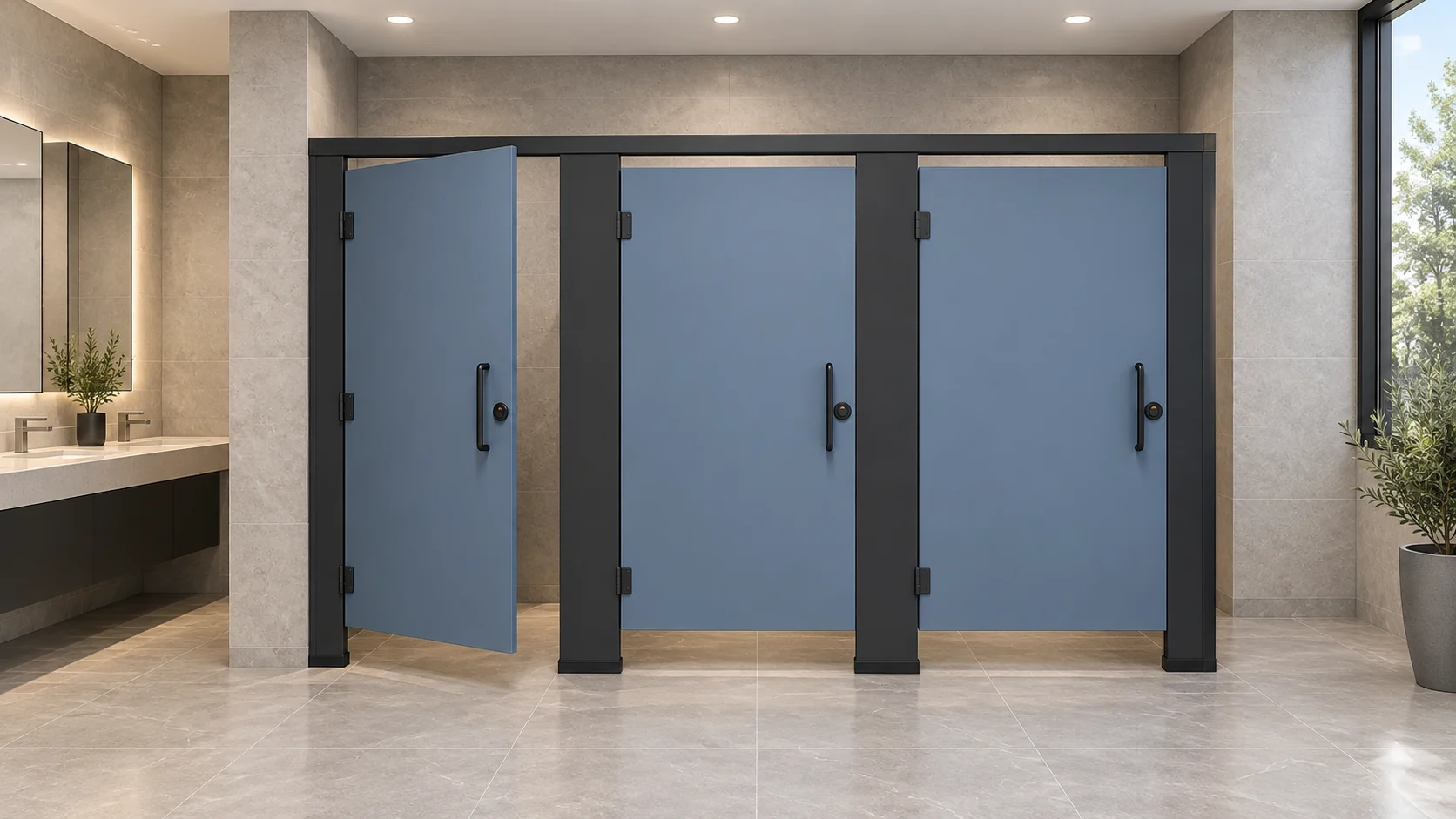
- Confirm scope and product category. State that the package concerns commercial toilet partitions or cubicles. Do not treat HPL, compact laminate, phenolic or stainless steel as interchangeable; each requires its own approved evidence.
- Review layouts and privacy expectations. Walk through cubicle positions, sightlines and privacy intent. Record any dimension or finish that must be verified against project-specific evidence.
- Examine door operation. Discuss swing, clearance and hardware interfaces without inferring hidden construction from illustrations.
- Map support interfaces. Identify where partitions meet walls, floors, ceilings or structural supports. Note any condition that requires structural confirmation.
- Review cleaning documentation. Confirm what the facility team needs for ongoing care and whether that documentation is available for the proposed configuration.
- List applicable local requirements. Capture the requirements the project team will address, without asserting unverified compliance.
- Assign evidence owners. For every open item, name the party responsible for providing approved technical evidence.
Decision Checklist for the Review Team
Use this checklist to separate confirmed items from items that still require project-specific evidence. It is a working tool, not a compliance certificate.
| Review area | Confirmed in meeting | Requires project-specific evidence |
|---|---|---|
| Layout and cubicle positions | General arrangement agreed | Final dimensions and clearances |
| Privacy intent | Design intent noted | Any performance or rating claim |
| Door operation | Swing direction discussed | Hardware details and mounting |
| Support interfaces | Interface locations identified | Structural capacity and fixing method |
| Cleaning documentation | Requirement recorded | Material-specific care instructions |
| Local requirements | List compiled | Compliance demonstration |
Evidence Boundaries and Common Pitfalls
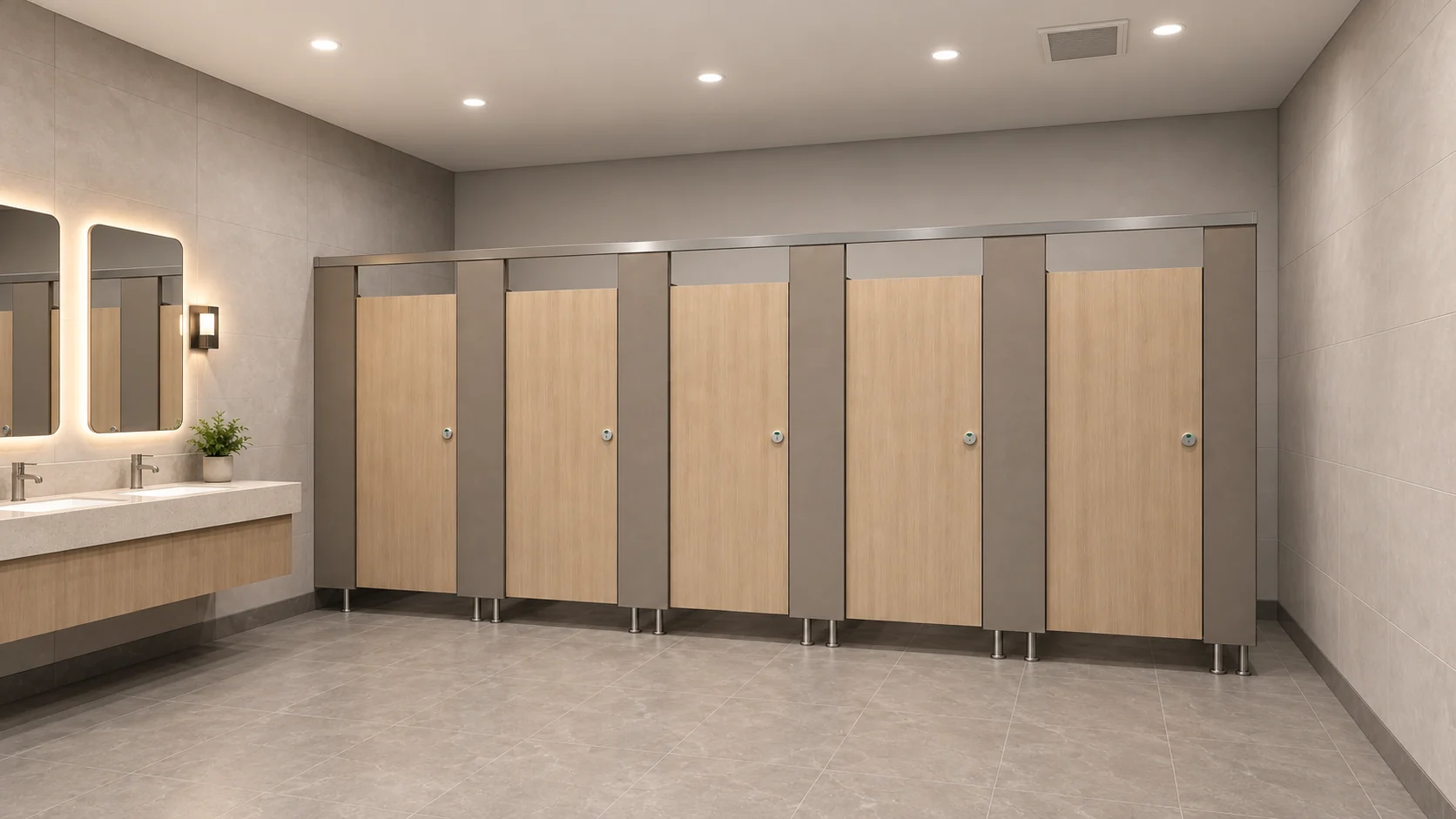
The most frequent tender review error is treating a generic illustration as a construction detail. Illustrations show generic design references, not completed EBUNGE customer projects.
Another pitfall is assuming that materials are interchangeable. HPL, compact laminate, phenolic and stainless steel each carry different characteristics and must be evaluated against their own approved technical evidence. The meeting should record which material is being considered and what evidence is still outstanding.
Evidence note: Any project-specific material, hardware, dimension, finish, mounting or rating requires matching approved technical evidence. If that evidence is not available at the meeting, the item remains open.
Coordinating with Suppliers and Internal Teams
Toilet partition coordination improves when the review meeting produces a clear action log rather than a revised specification. The action log should distinguish between items the project team can resolve internally and items that require supplier input.
For product category context, the EBUNGE product range covers commercial toilet partitions and cubicles. Project teams can use the resources section to prepare questions before requesting project-specific documentation. When a supplier response is needed, route it through the contact channel so that the request and response are traceable.
Documenting Outcomes and Next Steps
Close the meeting by confirming the action log, the evidence owners and the date by which each item must be resolved. Avoid converting open items into assumed facts in the minutes. If a decision depends on a local requirement, record the requirement and the party responsible for demonstrating how it will be addressed.
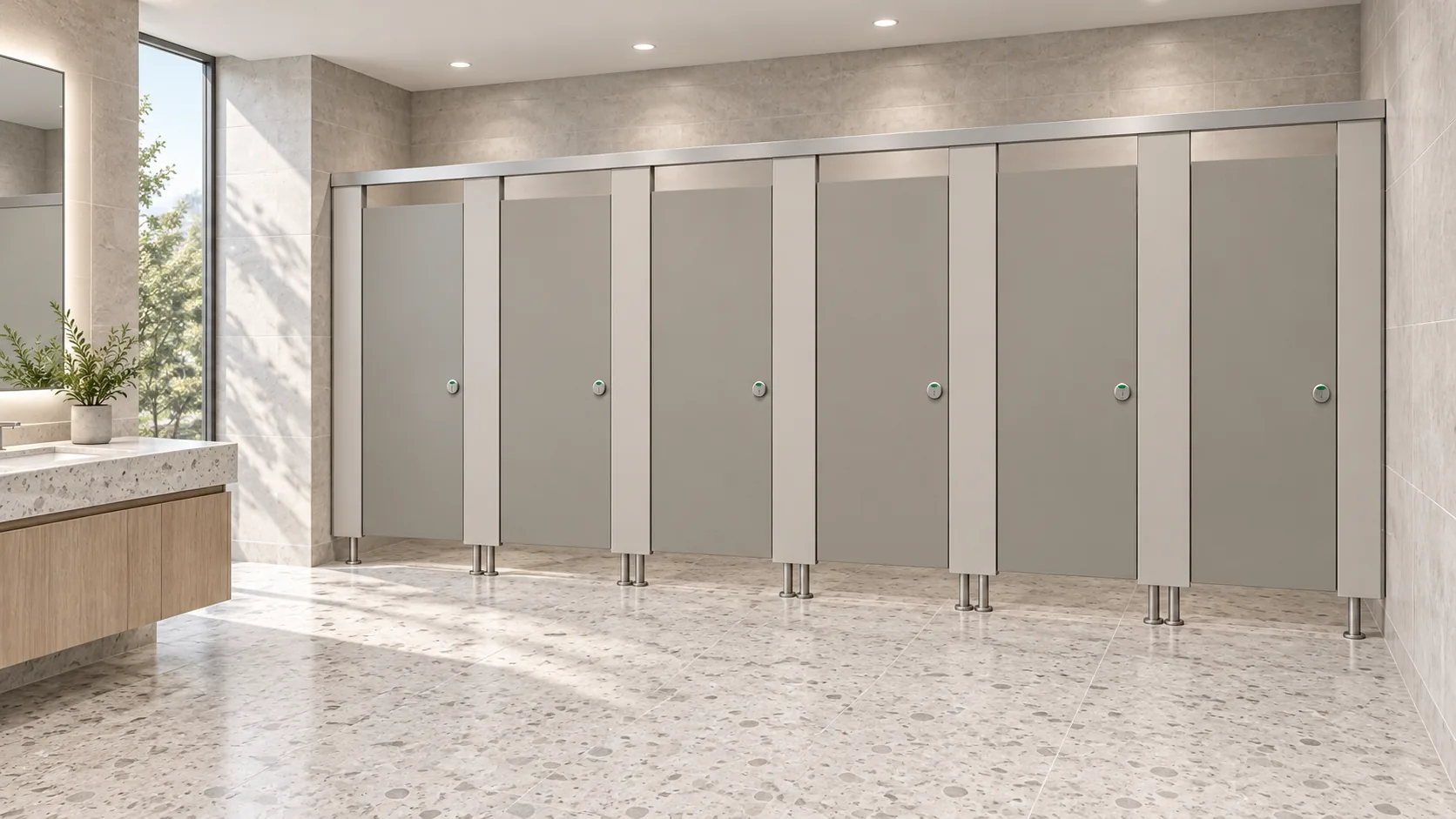
The minutes should also note which drawings were reviewed as generic design references. This prevents later readers from mistaking an illustration for a project-specific construction detail.
Frequently Asked Questions
What is the purpose of a toilet partition hardware tender review meeting?
It aligns the project team on layouts, privacy intent, door operation, support interfaces, cleaning documentation and applicable local requirements. It also identifies which items require project-specific evidence before the tender package is finalised.
Can the meeting confirm compliance with local building regulations?
No. The meeting can list applicable local requirements and assign responsibility for addressing them, but it should not assert unverified compliance. Compliance demonstration requires project-specific evidence and, where applicable, review by the relevant authority.
How should the team handle material selection during the review?
Treat each material option separately. Do not treat HPL, compact laminate, phenolic or stainless steel as interchangeable. Record which material is under consideration and what approved technical evidence is still required.
What should be included in the action log?
Each open item, the evidence required, the party responsible for providing it and the target date. Items without matching approved technical evidence should remain open rather than being assumed.
Are illustrations acceptable in a tender review meeting?
Yes, as generic design references. They help explain intent but do not confirm dimensions, materials, hardware, mounting or performance. Illustrations show generic design references, not completed EBUNGE customer projects.
How does cleaning documentation fit into the review?
The facility team should state what cleaning and maintenance documentation it needs. The project team then confirms whether that documentation is available for the proposed configuration, without assuming material-specific care requirements.
Conclusion and Contact
A well-run toilet partition hardware tender review meeting keeps the project moving without overstepping the available evidence. By separating confirmed product category facts from project-specific requirements, the team can issue a clearer tender package and reduce the risk of unsupported claims entering the specification.
To discuss project-specific documentation needs for commercial toilet partitions or cubicles, contact EBUNGE and include the relevant drawings, open items and evidence requirements in your enquiry.