
How Architects Resolve Toilet Partition Hardware Clashes Before Tender
Quick project answer
Toilet partition hardware clash resolution is a pre-tender review discipline, not a post-award correction exercise. When architects, contractors and owners review cubicle layouts early, they can identify where door operation, support interfaces and adjacent building elements compete for the same space. EBUNGE product category includes commercial Toilet Partition / Toilet Cubicle. This article sets out a coordination framework for project teams.
It does not confirm any project-specific material, hardware, dimension, finish, mounting or rating; those require matching approved technical evidence.
Why Hardware Clashes Surface Late in Toilet Partition Projects
Clashes rarely appear because one trade ignored another. The project team should confirm project-specific requirements against the relevant approved technical evidence. Each discipline may be internally correct while the combined result is not.
Pre-tender review gives the project team time to compare drawings, schedules and specifications before commercial commitments are fixed. It also separates what is known from what still needs confirmation.
Common coordination pressure points
- Door swing and adjacent fixture or accessory positions.
- Support interfaces where partition runs meet walls, floors or structural elements.
- Cleaning access around cubicle runs and within individual compartments.
- Privacy expectations expressed in the brief but not yet translated into approved details.
- Local requirements that apply to the project location.
A Pre-Tender Review Sequence for Project Teams
The sequence below is a coordination aid. It does not replace project-specific engineering, code review or approved technical documentation.
- Collect current drawings. Gather architectural plans, reflected ceiling plans, services drawings and any partition layout issued for review.
- Mark the partition envelope. Identify where cubicle runs, doors and support interfaces are expected to sit.
- Overlay adjacent services. Check plumbing, electrical and ventilation routes against the partition envelope.
- Review door operation. Confirm swing direction, clearance and access expectations with the project team.
- Check support interfaces. Identify where partition elements meet walls, floors or structural supports and who owns each interface.
- Confirm cleaning documentation. Agree how cleaning access and maintenance will be described in the specification.
- List open items. Record every unresolved material, hardware, dimension, finish, mounting or rating question for evidence follow-up.
Evidence Boundaries Every Specification Should Respect
Pre-tender documents often carry assumptions forward. A useful discipline is to label each statement by evidence status: confirmed, project-specific and pending, or generic reference only.
What can be stated without project evidence
General statements about the product category, the review process and the need for coordination are safe. EBUNGE product category includes commercial Toilet Partition / Toilet Cubicle. Statements about a specific project’s material, hardware, dimensions, finishes, mounting or ratings are not safe without matching approved technical evidence.
What requires project-specific confirmation
- Material selection and finish for the project.
- Hardware type, quantity and fixing approach.
- Dimensions, set-out and support positions.
- Any rating, performance or compliance statement.
- Quotation terms and commercial scope.
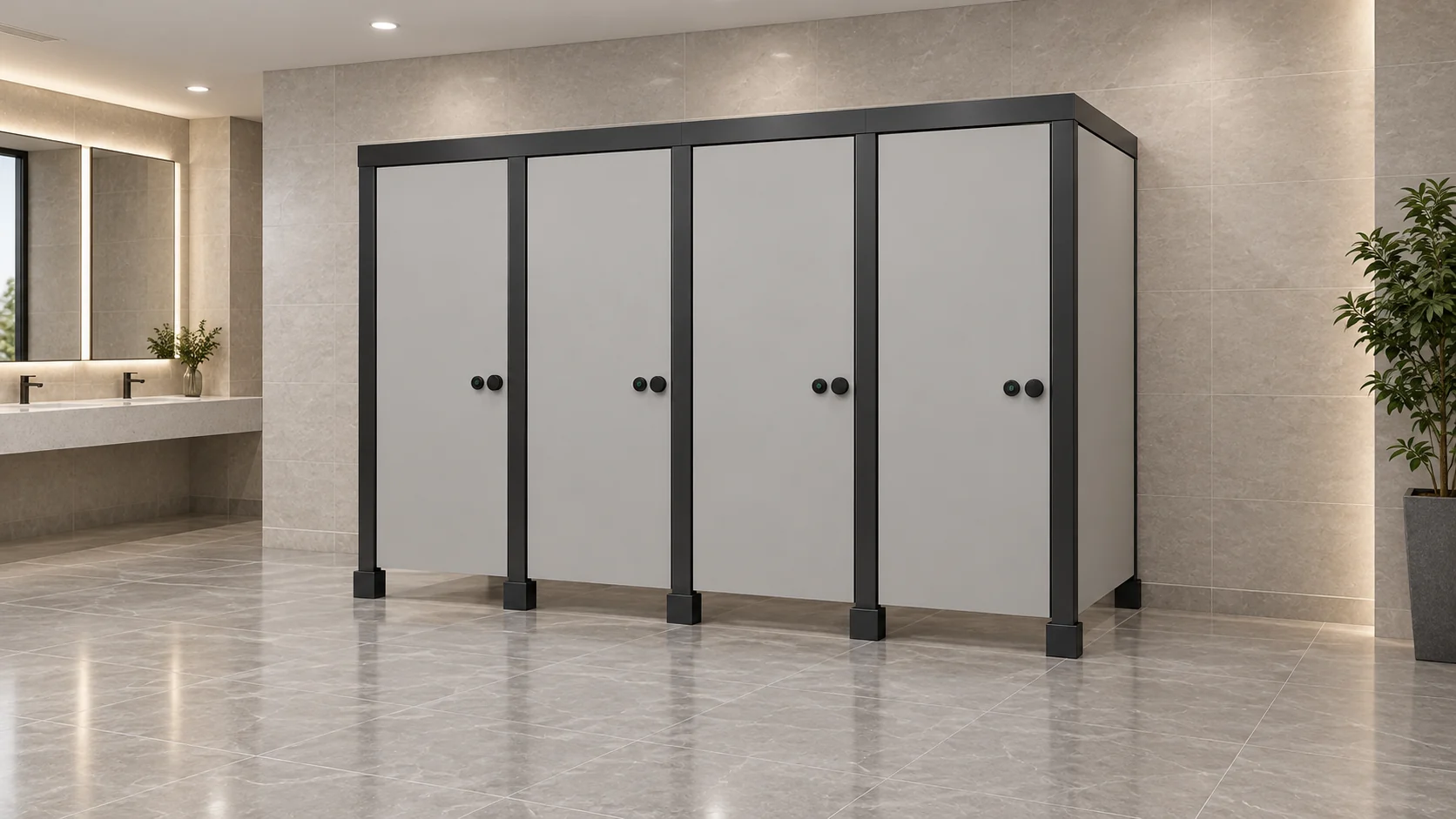
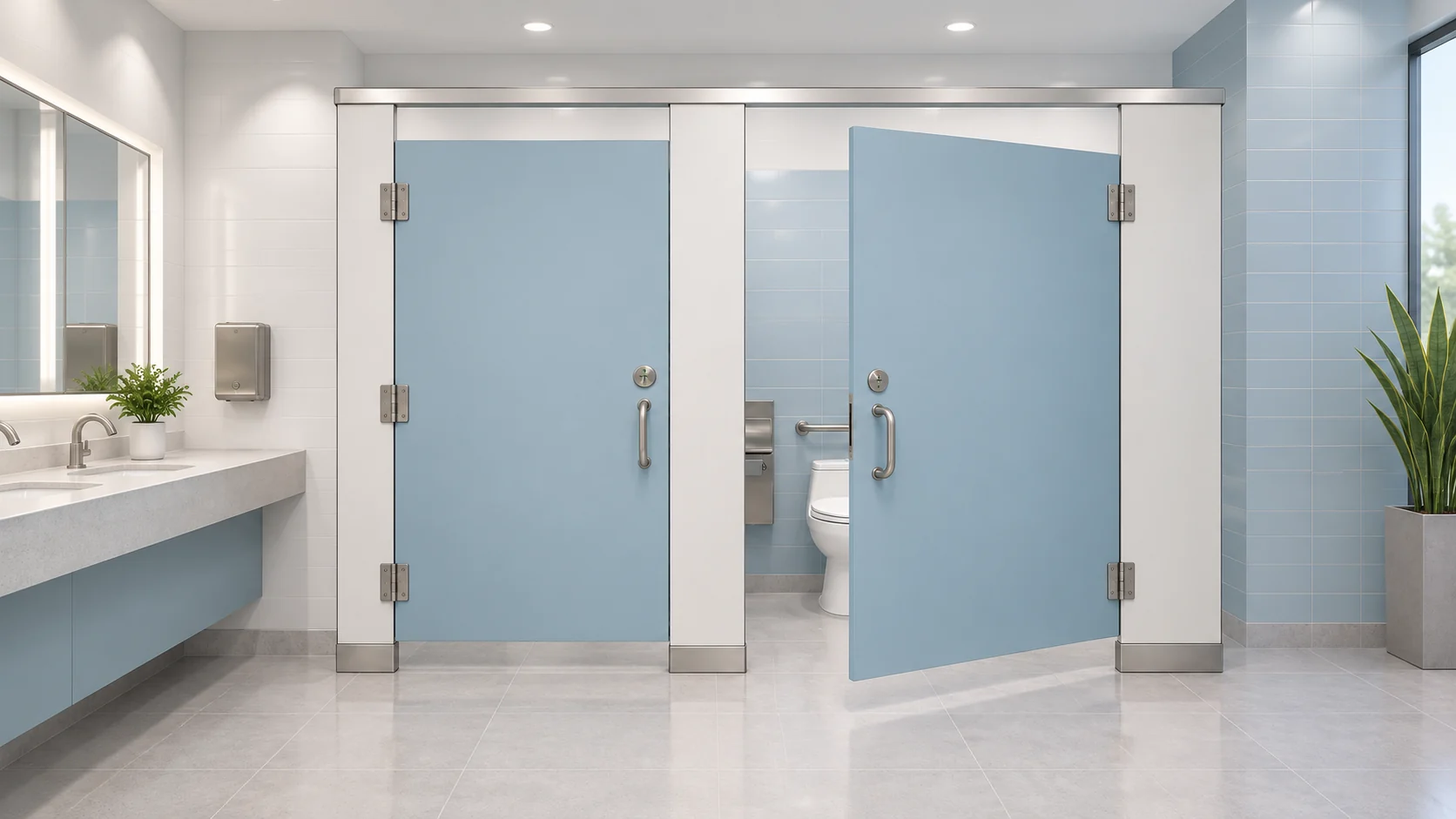
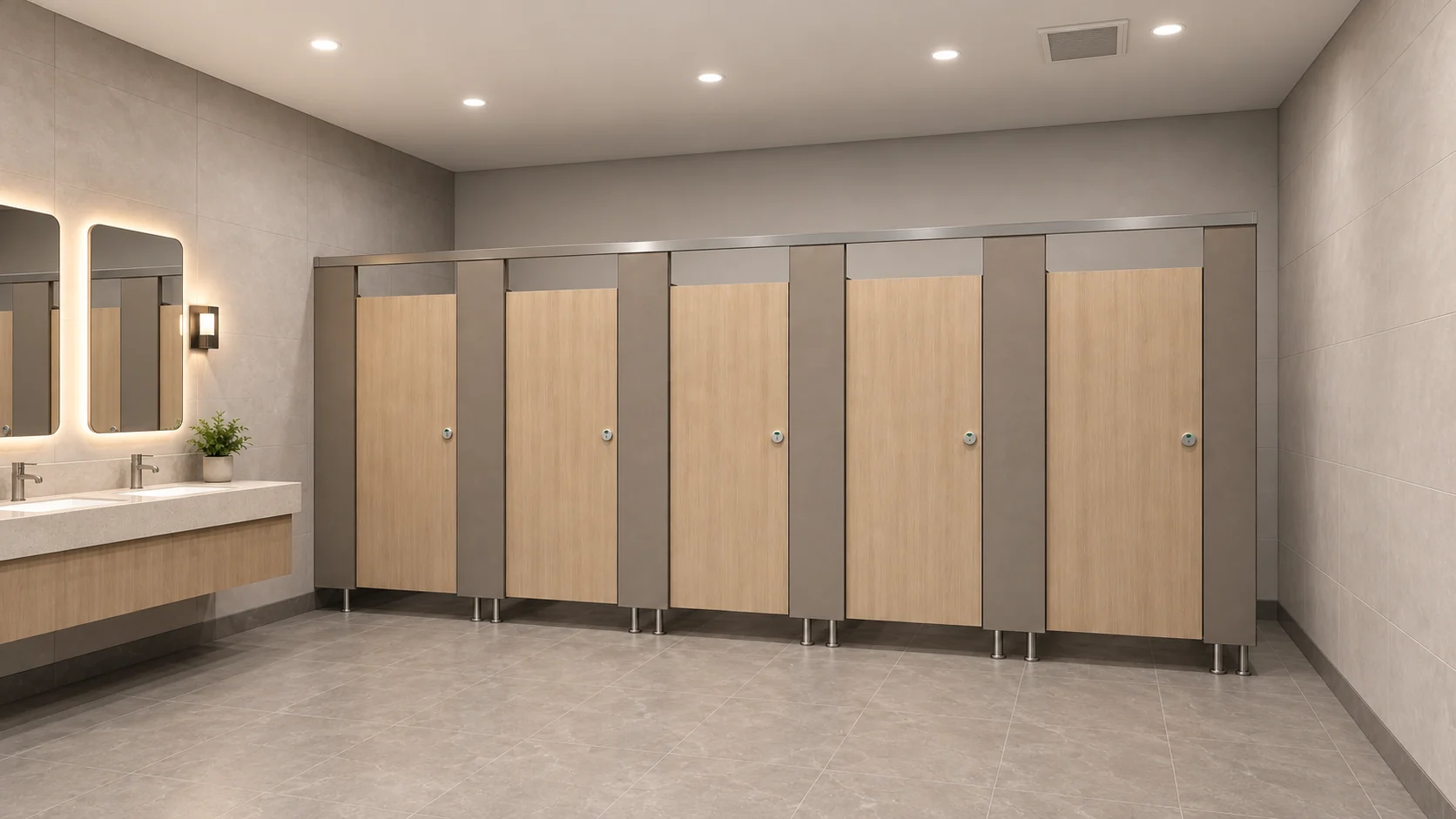
Evidence note: illustrations in this article and on product pages show generic design references, not completed EBUNGE customer projects. They should not be used to infer hidden construction, material composition or performance.
Coordination Checklist Before Tender Issue
Use this checklist as a working document. It is designed to surface questions, not to certify compliance.
| Review area | Question for the project team | Evidence needed |
|---|---|---|
| Layout | Do cubicle runs and door positions fit the available space? | Current architectural drawings |
| Privacy | Does the brief describe privacy expectations clearly? | Approved project brief |
| Door operation | Is swing direction and clearance agreed? | Door schedule and layout review |
| Support interfaces | Who owns each wall, floor and structural connection? | Interface register |
| Cleaning | Is cleaning access documented for the specification? | Cleaning and maintenance notes |
| Local requirements | Which local rules apply to this project? | Applicable local requirements |
How to Document Clash Resolution Decisions
Decisions made in meetings are easily lost. A short decision log keeps the project team aligned and gives tender reviewers a clear trail.
Record the date, the drawing revision, the clash identified, the decision taken and the evidence that supports it. Where evidence is missing, record the item as open rather than closing it prematurely.
Suggested decision log fields
- Clash reference and location.
- Disciplines involved.
- Decision and rationale.
- Supporting evidence or open status.
- Owner and next review date.
Working With Suppliers and Product Information
Product information supports coordination, but it does not replace project review. When reviewing EBUNGE product context, use the maintained product pages as a starting point and confirm project-specific details separately.
For general product context, see the EBUNGE toilet partition product range. For broader guidance, the resources section collects related articles. When a project question cannot be answered from maintained information, use the contact route to request clarification.
Frequently Asked Questions
What is toilet partition hardware clash resolution?
It is the pre-tender process of identifying and resolving conflicts between partition hardware, door operation, support interfaces and adjacent building elements before commercial commitments are fixed.
When should clash resolution start?
It should start as soon as layout drawings are available and continue through design development, so that open items are visible before tender issue.
Can a supplier confirm project-specific hardware before tender?
Only where matching approved technical evidence exists for that project. Otherwise the item should remain open and be listed for confirmation.
Do illustrations show real EBUNGE projects?
No. Illustrations show generic design references, not completed EBUNGE customer projects, and should not be used to infer hidden construction or performance.
How should local requirements be handled?
The project team should identify applicable local requirements and review them with qualified advisers. This article does not assert compliance with any local rule.
What should be included in a decision log?
Include the clash reference, disciplines involved, decision, supporting evidence or open status, owner and next review date.
Conclusion
Architects and contractors who compare layouts, privacy expectations, door operation, support interfaces, cleaning documentation and applicable local requirements before tender reduce the risk of late changes. Every project-specific material, hardware, dimension, finish, mounting or rating still requires matching approved technical evidence.
To discuss a project review or request product information, contact the EBUNGE team.