
Procurement Review Checklist for Toilet Partition Hardware Submittals
Quick project answer
Review focus: hardware submittals.
Toilet partition hardware submittals sit at the point where design intent, procurement documents and site conditions meet. For overseas contractors, architects, interior designers, owners and renovation teams, the review is not a single approval stamp. It is a structured check that every proposed item matches maintained product facts and project-specific approved technical evidence. This checklist helps project teams examine toilet partition hardware submittals without inferring hidden construction, unverified performance or commercial terms. EBUNGE product category includes commercial Toilet Partition / Toilet Cubicle. Any project-specific material, hardware, dimension, finish, mounting or rating requires matching approved technical evidence.
Why Hardware Submittals Need an Evidence-Bounded Review
Hardware submittals often arrive as a package of schedules, drawings, product references and coordination notes. The risk is that reviewers fill gaps with assumptions. A door closer shown in a generic illustration does not confirm a specific model, fixing pattern or adjustment range. A finish name in a schedule does not confirm a supplier’s actual finish. The review should separate what is documented from what still needs confirmation.
This is especially important when several trades share the same washroom zone. Partition layouts interact with floor finishes, wall build-ups, sanitaryware positions, access panels and cleaning routes. The submittal review should record open items rather than resolve them by inference.
Pre-Submittal Information the Project Team Should Gather
Before reviewing any hardware package, confirm that the project team has a controlled set of base documents. Missing information at this stage usually returns as a comment later.
- Current architectural layout showing cubicle positions, door swings and circulation.
- The project team should confirm project-specific requirements against the relevant approved technical evidence.
- Project specification sections that name submittal requirements and review stages.
- Approved technical evidence for any material, hardware, dimension, finish, mounting or rating proposed.
- Applicable local requirements identified by the project team, not assumed by the supplier.
- Cleaning documentation expectations agreed with the owner or facilities team.
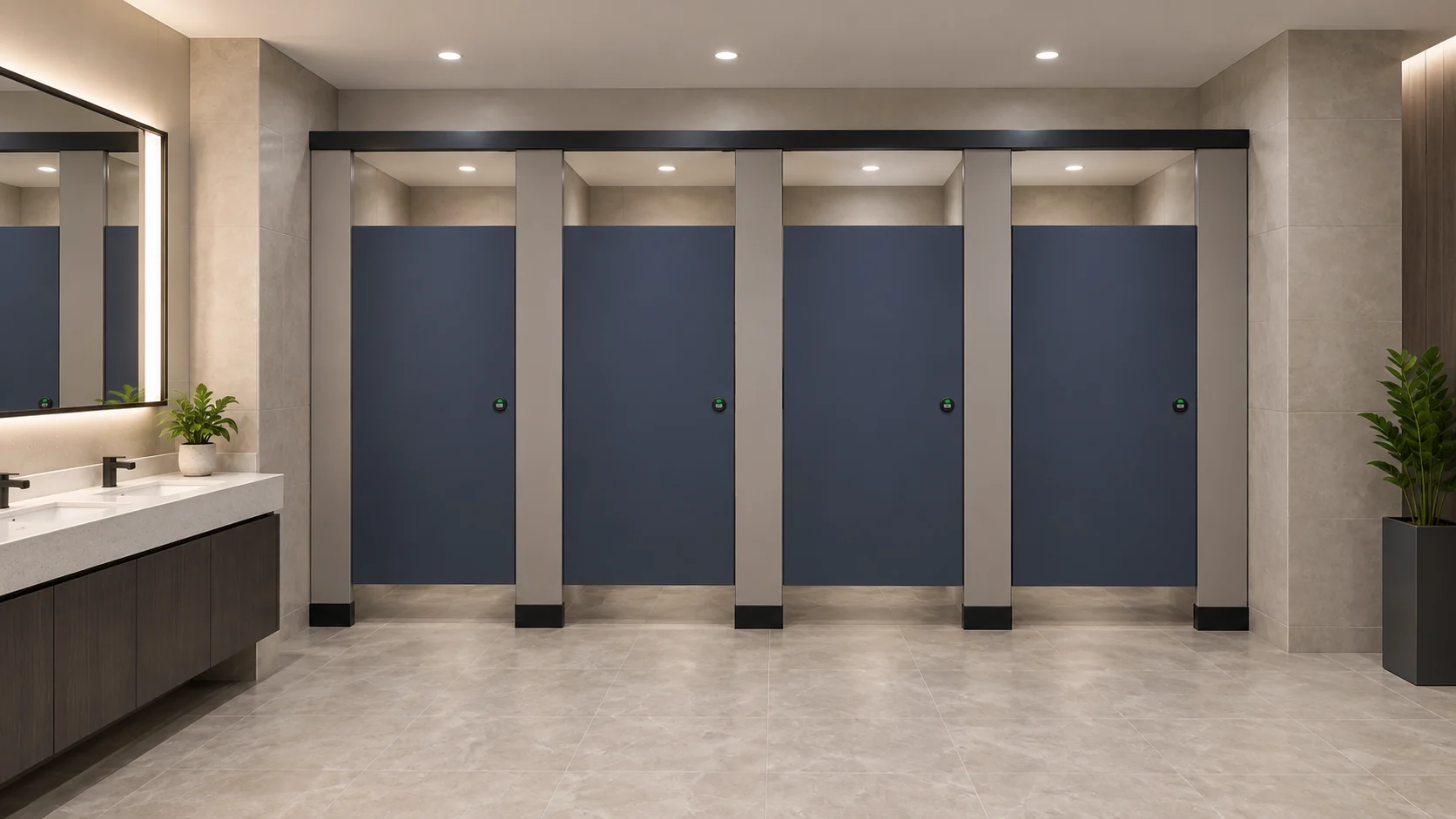
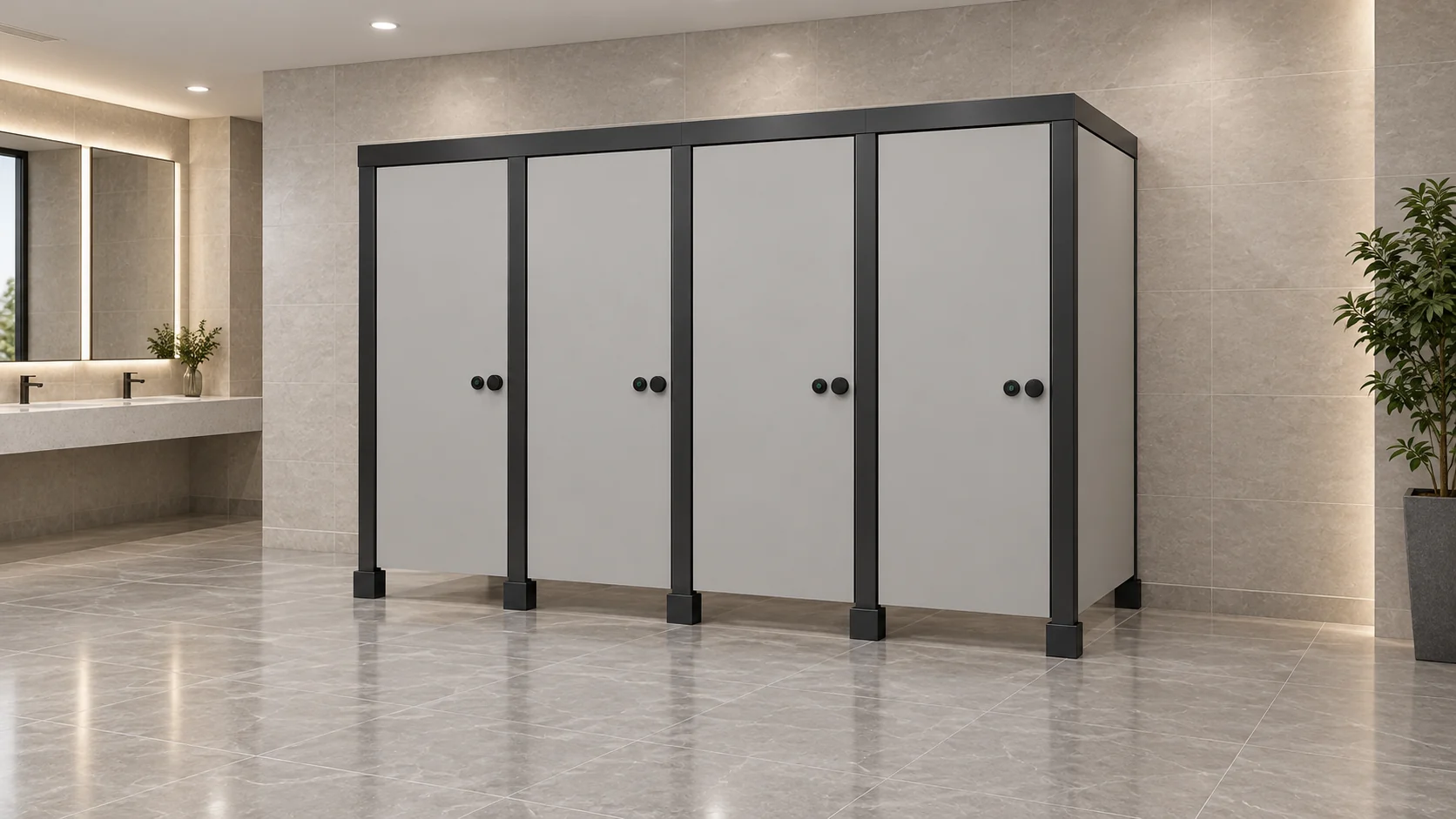
Where a document is marked illustrative, treat it as a generic design reference, not as a completed EBUNGE application reference. Illustrations show generic design references, not completed EBUNGE customer projects.
Layout, Privacy and Door Operation Checks
Layout coordination
Review cubicle dimensions against the approved layout, not against a catalogue image. Check that door swing, clearance and adjacent fixtures are shown consistently. If a dimension is not confirmed in approved technical evidence, mark it as an open item.
Privacy review
Privacy expectations vary by project and jurisdiction. The project team should state the required privacy approach in the specification and verify that the submittal responds to it. Do not accept a generic statement about gaps, sightlines or panel joints unless it is supported by approved technical evidence.
Door operation
Door operation includes hinge type, closing action, latch arrangement, emergency access and maintenance access. Each of these is project-specific. A submittal should identify the proposed hardware and show how it interfaces with the partition leaf and frame. If the hardware is not confirmed, the review should say so.
Support Interfaces and Mounting Coordination
Support interfaces are a common source of site queries. The submittal should show how partitions connect to floors, walls, ceilings or supporting structure, and who is responsible for each interface. Reviewers should check that the proposed fixing method matches the substrate information available for the project.
Do not infer load capacity, fixing strength or structural performance from a drawing. Those are project-specific and require matching approved technical evidence. Where substrate conditions are unknown, record a request for confirmation rather than approving by default.
Cleaning Documentation and Maintenance Access
Cleaning teams need to understand how surfaces, edges and hardware are maintained. The submittal review should confirm that cleaning documentation is available for the proposed configuration and that access to hardware, fixings and concealed connections is not blocked by other trades.
Ask whether the design allows routine cleaning without dismantling components. If the answer depends on a specific material or finish, that material or finish must be confirmed in approved technical evidence. Do not treat HPL, compact laminate, phenolic or stainless steel as interchangeable.
Applicable Local Requirements and Compliance Boundaries
The project team is responsible for identifying which requirements apply and for confirming compliance through the appropriate local process. A supplier submittal can support that review, but it does not replace it.
Describe project-team review of layouts, privacy, door operation, support interfaces, cleaning documentation and applicable local requirements without asserting unverified compliance. Where a requirement is not confirmed, the submittal should remain open.
Decision Checklist for Reviewers
| Review area | Question to ask | Evidence needed |
|---|---|---|
| Layout | Does the submittal match the approved plan? | Current project drawings |
| Privacy | Is the privacy approach stated in the specification? | Project specification and approved evidence |
| Door operation | Are hinges, closing and access shown? | Hardware schedule and approved evidence |
| Support interfaces | Are fixing responsibilities clear? | Interface drawings and substrate information |
| Cleaning | Is maintenance access preserved? | Cleaning documentation and layout review |
| Local requirements | Has the project team identified applicable rules? | Local approval process records |
Common Review Pitfalls to Avoid
- Treating a generic illustration as a project-specific configuration.
- Assuming a material or finish from a product name without approved evidence.
- Approving hardware without confirming the fixing interface.
- Leaving privacy or door operation comments unresolved across revisions.
- Confusing a supplier submittal with local compliance approval.
- Describing toilet cubicles as movable operable walls or introducing suspended wall travel, stacking or parking mechanisms.
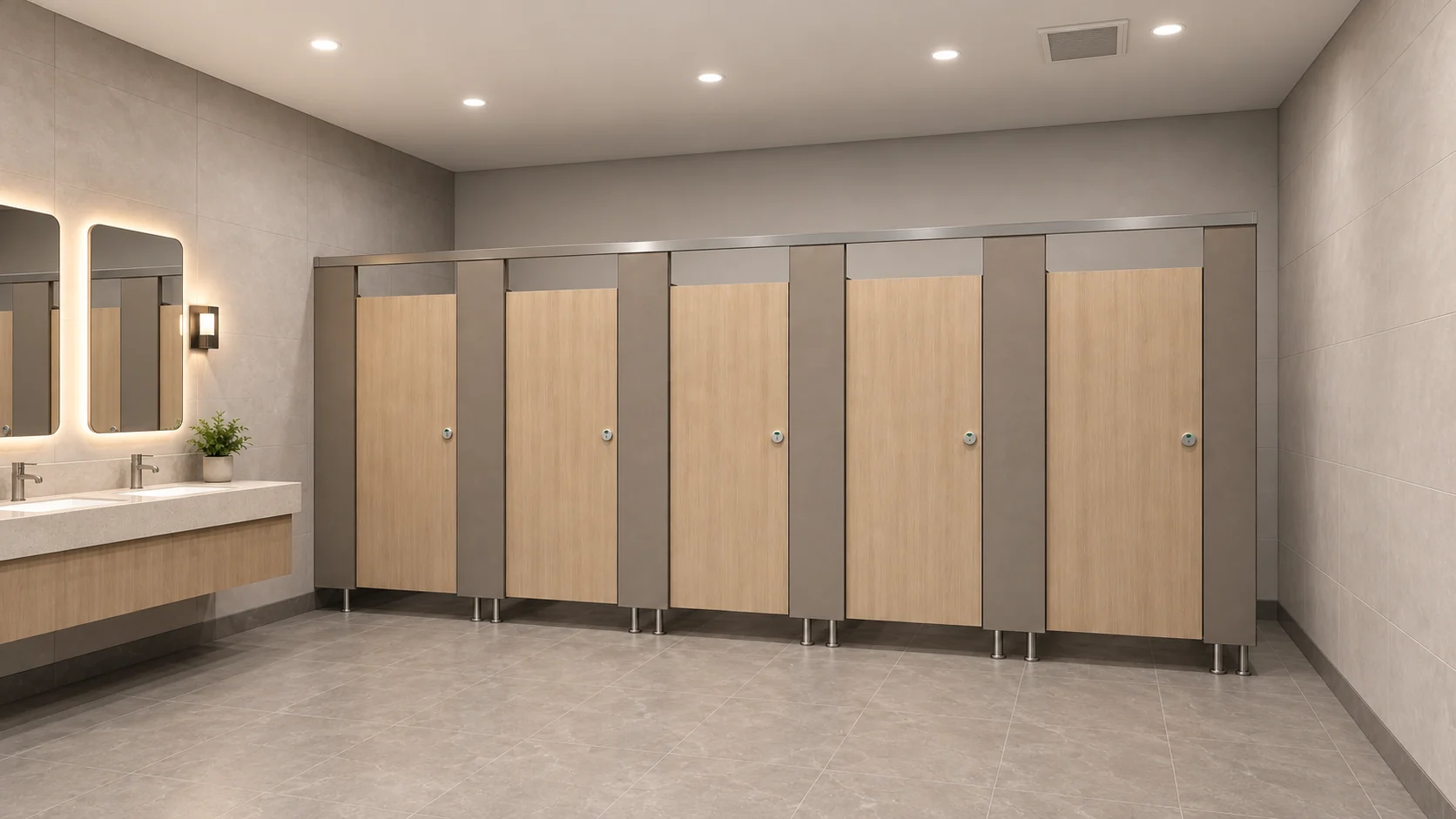
For maintained product context, review the EBUNGE product category and supporting resources. Project-specific questions should be directed through contact so that the right technical evidence can be confirmed.
Frequently Asked Questions
What information is required for toilet partition hardware submittals?
At minimum, the project team should provide current layout drawings, the relevant specification sections, proposed hardware references and any approved technical evidence for materials, dimensions, finishes, mountings or ratings. Missing items should be listed as open review points.
Can a supplier illustration confirm a project-specific configuration?
No. Illustrations show generic design references, not completed EBUNGE customer projects. A project-specific configuration requires matching approved technical evidence.
How should reviewers handle privacy and door operation?
Review them against the project specification and approved layout. If the privacy approach or door hardware is not confirmed in approved evidence, record it as an open item rather than assuming a standard solution.
Do submittals confirm local compliance?
No. The project team remains responsible for identifying applicable local requirements and confirming compliance through the appropriate local process. A submittal supports that review but does not replace it.
What should be checked for support interfaces?
Check that the submittal shows how partitions connect to floors, walls, ceilings or supporting structure, and that responsibility for each interface is clear. Do not infer load capacity or fixing performance without approved technical evidence.
How does cleaning documentation fit into the review?
Cleaning documentation should be available for the proposed configuration, and the layout should preserve access to hardware and fixings. If cleaning depends on a specific material or finish, that item must be confirmed in approved technical evidence.
Conclusion and Next Steps
A disciplined review of toilet partition hardware submittals protects the project from assumptions that later become variations. Keep every recommendation tied to maintained product facts, visible evidence limits and project-specific drawing review. Where information is missing, leave the item open and request confirmation.
To discuss a project requirement or request the relevant technical evidence, contact EBUNGE. The team can help route your inquiry to the appropriate product and documentation review.